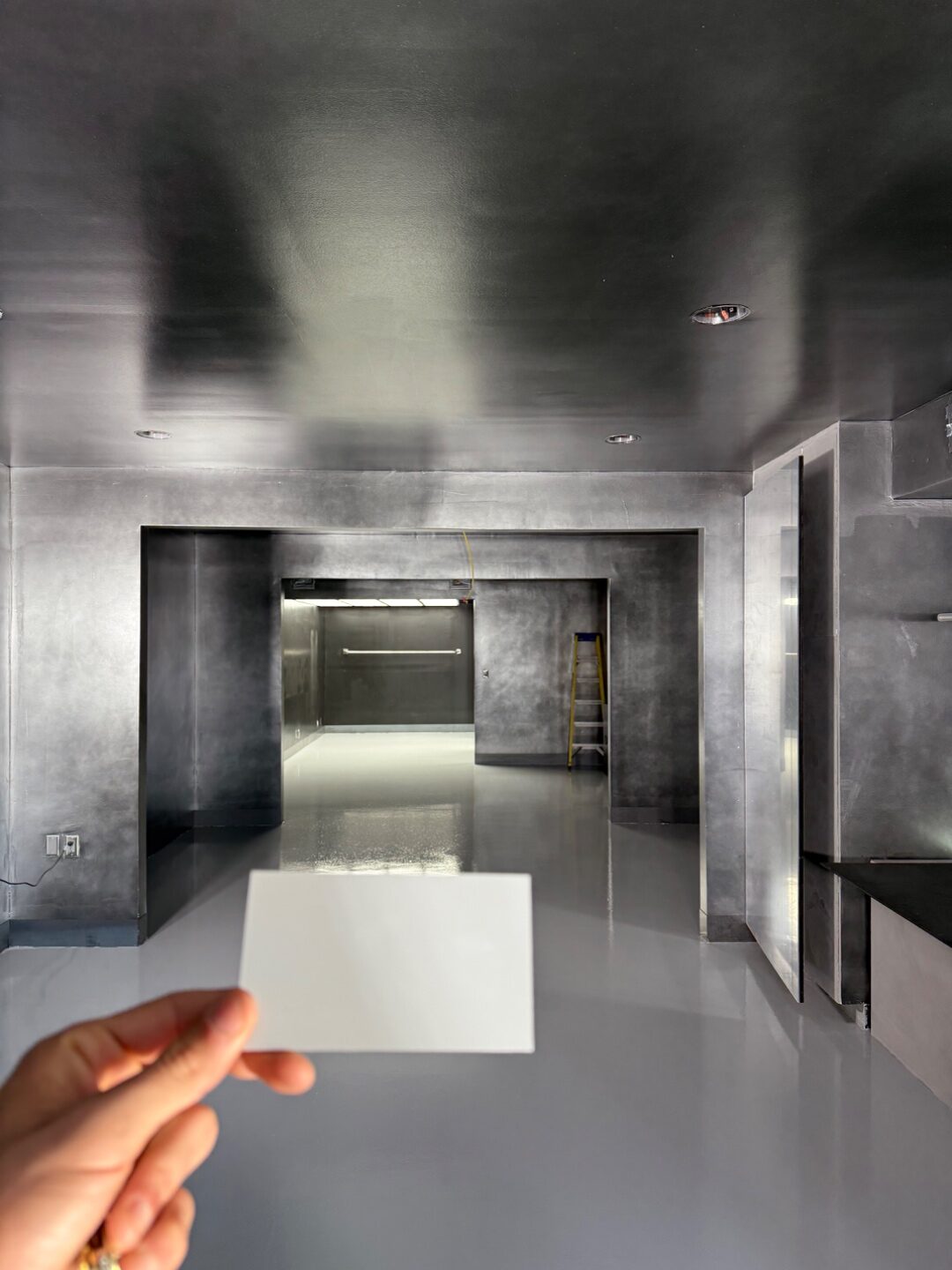
Bare concrete and old coatings don't fail all at once — they show warning signs first. Here's what to look for before a small problem turns into a full slab repair.
1. Visible cracks or spalling
Hairline cracks, chipping edges, or small pits in the concrete surface are more than cosmetic — they let moisture in, and moisture is the enemy of any coating applied on top. If you can see the concrete itself deteriorating, that needs to be addressed before any recoat.
2. Constant dusting
If your garage floor leaves a fine gray powder on everything — tires, shoes, storage boxes — that's concrete dusting, a sign the slab surface is breaking down. A properly installed epoxy or polyaspartic coating seals this completely.
3. Peeling or bubbling paint
A lot of garages have a thin "garage floor paint" from a big-box store rather than a true coating system. When that paint peels, bubbles, or flakes off in sheets, it usually means it was never properly bonded to the concrete in the first place — often because the surface wasn't ground or profiled before painting.
4. Hot tire marks or lifted spots
If you notice small bubbled or wrinkled patches where your tires typically sit, that's hot tire pickup — a common failure point for basic epoxy-only coatings that lack a polyaspartic topcoat. It's a sign the coating system wasn't built to handle daily vehicle use.
5. Stains that won't come out
Oil, coolant, and other automotive fluids soak into bare or poorly sealed concrete and become permanent stains. A properly cured coating creates a non-porous surface that resists staining entirely, so spills wipe up rather than sink in.
6. Faded or yellowed color
If your existing coating has gone yellow or chalky, especially near a window or garage door that gets direct sun, that's a sign it was epoxy without a UV-stable topcoat. This is purely cosmetic but signals the coating is past its intended lifespan.
7. It's just old
Even a well-installed coating has a practical lifespan, especially in a garage that sees daily vehicle traffic. If your floor was coated more than a decade ago and any of the signs above are starting to show, it's a reasonable time to plan a recoat rather than wait for full failure.
Seeing any of these signs in your garage?
Get a Free AssessmentWhat a proper recoat involves
Recoating isn't just painting over the old surface. It typically requires diamond grinding to remove the old coating and re-open the concrete pores, repairing any cracks or pits found underneath, and then applying a fresh epoxy basecoat with a polyaspartic topcoat. Skipping the grinding step and coating directly over an old, failing surface is one of the most common reasons a recoat fails again within a year or two.
The bottom line
Catching these signs early keeps a simple recoat from turning into a bigger concrete repair project. If your garage floor is showing any combination of cracking, dusting, peeling, or staining, it's worth getting a professional opinion before the damage spreads.