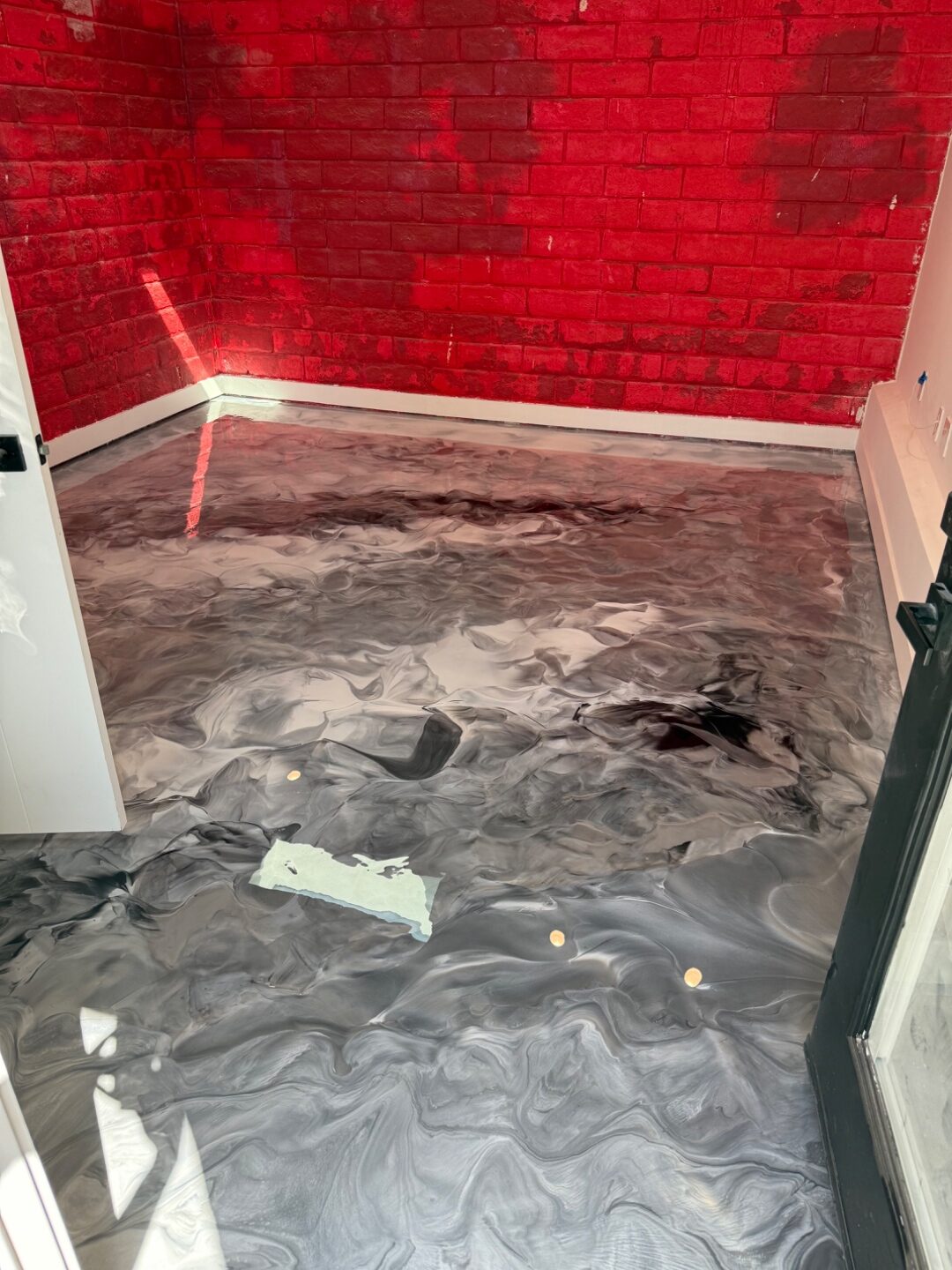
"Epoxy floor" has become a catch-all term, but there are real chemistry differences between epoxy and polyaspartic coatings — and those differences show up the first time you park a hot car on top or leave the garage door open on a sunny afternoon.
What epoxy does well
Epoxy is a strong, thick basecoat that bonds tightly to properly prepared concrete. It builds a solid, high-build layer and takes color and decorative flake well, which is why it's the standard choice for the base layer of a coating system. It's also relatively affordable compared to specialty topcoats.
Where epoxy falls short
Two things trip up epoxy-only floors: cure time and UV exposure. Epoxy typically needs 24–72 hours before light foot traffic and up to a week before you can park a vehicle on it. It's also prone to yellowing and chalking when exposed to UV light over time — a real issue for garages with windows or doors that let in direct sun. Straight epoxy is also more vulnerable to "hot tire pickup," where the heat and pressure from a tire that's been driven on the freeway can actually lift and wrinkle the coating.
What polyaspartic adds
Polyaspartic is a newer, more advanced topcoat chemistry. It cures dramatically faster — often within hours rather than days — and resists UV fading, which means it holds its color and gloss over years of sun exposure. It's also significantly more resistant to hot tire pickup, chemical spills, and abrasion.
So which one should you choose?
In practice, this usually isn't an either/or decision. Most professional installations — including ours — use an epoxy basecoat for adhesion, build, and color, topped with a polyaspartic layer for speed of cure, UV stability, and daily durability. You get the strengths of both systems instead of the weaknesses of either alone.
| Factor | Epoxy (basecoat) | Polyaspartic (topcoat) |
|---|---|---|
| Cure time | 24–72 hours | A few hours |
| UV stability | Can yellow over time | UV stable |
| Hot tire resistance | Weaker alone | Strong |
| Best use | Basecoat, color layer | Topcoat, indoor and outdoor |
Not sure which system fits your garage?
Ask UsWhat we use on most jobs
On garage floors, we typically pair an epoxy basecoat with a polyaspartic topcoat specifically to guard against hot tire pickup and UV fading — the two most common complaints we hear about DIY or big-box epoxy kits. For outdoor patios and pool decks, we lean even more heavily on polyaspartic systems since UV exposure is constant.
The bottom line
Epoxy and polyaspartic aren't competitors — they're complementary. The real question isn't "which one" but "does your installer use both correctly." A single-layer, big-box epoxy kit skips the topcoat that actually protects the floor day to day.