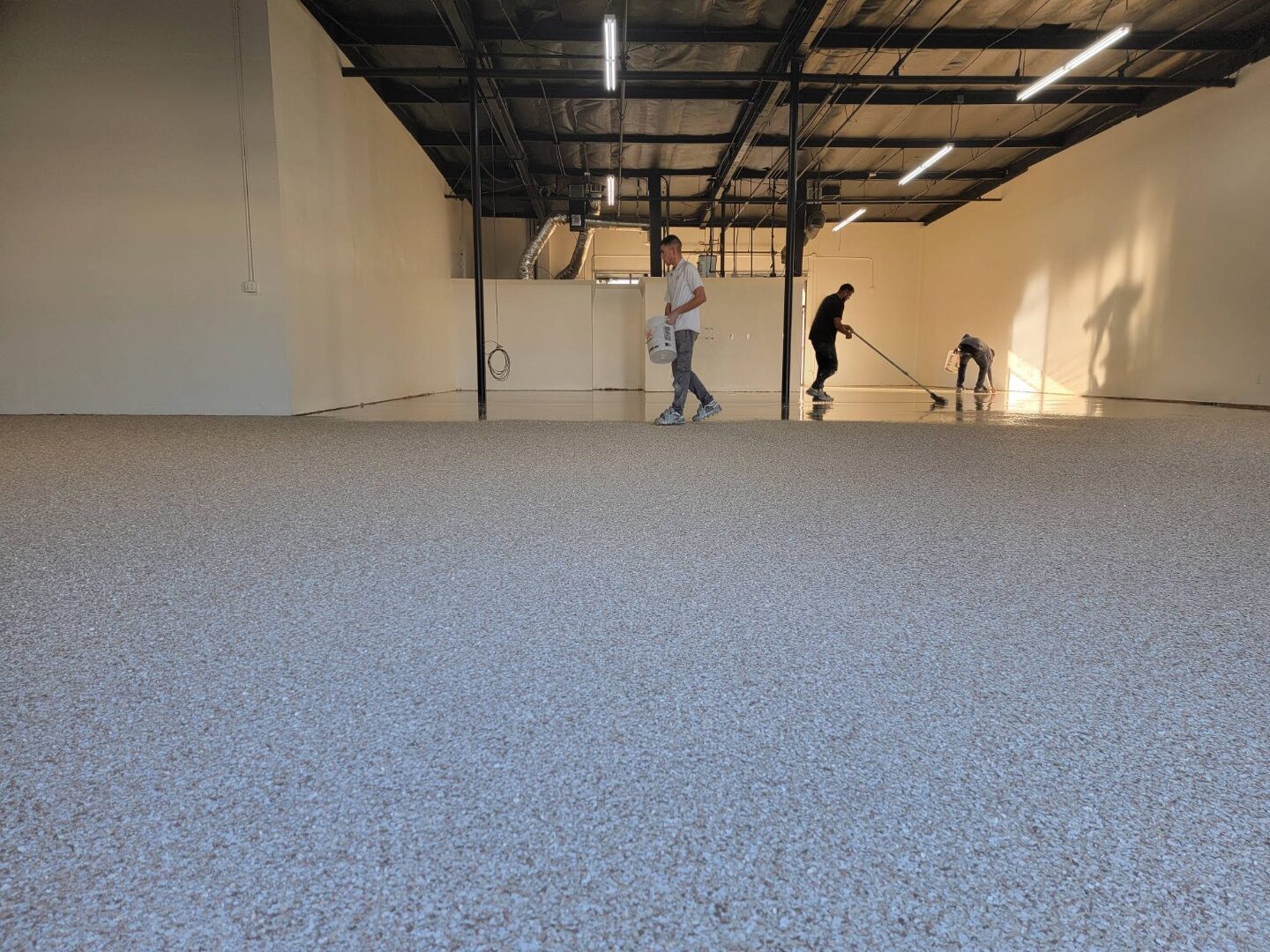
Coating a warehouse or commercial floor is a different job than a residential garage — the stakes are higher, the traffic is heavier, and every day of downtime has a real cost. If you're a property owner or facilities manager in Santa Ana or elsewhere in Orange County weighing commercial epoxy flooring, here's what to plan for.
Downtime is the first question
Most commercial coating projects are scheduled around your operating hours, not the other way around. Depending on the coating system, floors can often be walked on the same day and back in service for light traffic within 24–48 hours using fast-cure polyaspartic topcoats. We plan the sequence — grinding, repair, basecoat, topcoat — around minimizing the time your space is out of commission, including sectioning off large floors so part of the facility can keep operating.
Forklift and heavy equipment traffic
A warehouse floor coating has to handle continuous point loads from forklifts, pallet jacks, and racking systems — loads a residential garage floor never sees. This is where surface prep matters even more than in a home installation: diamond grinding creates the mechanical bond needed to keep a coating from delaminating under repeated wheel traffic, and the coating system itself needs enough build thickness to resist abrasion over years of daily use.
Chemical and moisture exposure
Warehouses and industrial spaces often deal with oil, fuel, cleaning chemicals, or occasional moisture from loading dock doors. A coating system for these environments needs chemical resistance built in, plus proper moisture testing of the slab before coating — skipping this step is one of the most common causes of commercial coating failure.
Line striping and safety markings
Commercial and warehouse floors typically need more than just a uniform color — think aisle markings, safety zones, pedestrian walkways, and equipment staging areas. These can be integrated directly into the coating installation rather than painted on separately after the fact, which holds up far better under equipment traffic.
Planning a commercial or warehouse coating project?
Request a Site VisitWhat to ask a commercial flooring contractor
- Can the project be phased or sectioned to avoid a full shutdown?
- What's the plan for moisture testing before coating?
- Is line striping and floor marking included or a separate line item?
- What's the expected traffic-ready and full-cure timeline?
- Does the contractor carry commercial liability insurance and is the crew licensed?
Serving Santa Ana and beyond
Primo Epoxy Flooring is based in Santa Ana and works on commercial and warehouse projects throughout Orange County, Los Angeles County, the Inland Empire, and San Diego County. Every commercial estimate starts with an on-site visit so we can assess slab condition, plan around your operating schedule, and give you a realistic timeline — not a generic number.
The bottom line
Commercial epoxy flooring succeeds or fails based on planning: proper moisture testing, surface prep suited to heavy traffic, and a schedule that respects your business operations. A contractor who can't speak to all three isn't ready for a warehouse-scale job.